Fall Furnace Maintenance: What to Check Before Heating Season
Orange County furnaces can sit unused for months. Then the first cold morning hits, and suddenly they're expected to fire right up. A little fall furnace maintenance now can help catch problems before you're stuck wondering why the heat won't turn on. Here's what you can safely check yourself, and when it's worth calling a pro.
Most of the year, your furnace does nothing. Then the temperature finally drops, you bump the thermostat over to heat, and a summer's worth of dust, a tired ignitor, or a dead thermostat battery can all show up at once. Fall furnace maintenance is really about finding that stuff on your terms, on a mild day, instead of at 6am when the house is cold.
A lot of the fall checklist is safe and simple, and it takes about fifteen minutes. The rest, the burners, the gas, and the safety side, is a quick job for a technician. Here's how to split the two.
At a Glance
Do it before the first cold stretch, not during it, so there's time to fix anything you find.
Orange County furnaces sit unused for months, so weak parts and dead batteries surface on the first run.
Safe to do yourself: the filter, the thermostat, the vents, and a test cycle.
Leave to a pro: the burners, heat exchanger, gas, and safety controls.
A yearly furnace tune-up costs a lot less than a no-heat repair on a cold night.
A Furnace That Sat All Summer
Here's the part people forget: your heater took the whole warm season off. Dust settled on the burners, the ignitor got a little older, and the thermostat may have been quietly draining its batteries the entire time. None of that shows up until the day you finally ask for heat.
Checking it in the fall, before you actually need it, means a problem becomes a scheduled fix instead of a cold-morning surprise. It also puts you ahead of the rush, when the first real cold snap has half the neighborhood calling at once.
Your Fall Furnace Checklist
None of these involve opening up the furnace or touching gas. They're the safe, useful things any homeowner can do in an afternoon.
Replace or Check the Air Filter
Start here, because it's the cheapest fix and the most common one. A filter that collected dust all summer chokes airflow, and a furnace starved for air runs hot and can shut itself off on a safety limit. Pull the filter, hold it up to the light, and if it's gray and packed, replace it. If you can't remember the last time you changed it, that's your answer.
Set and Test the Thermostat
Switch it to heat and set the target a few degrees above the room so it actually calls for warmth. If the screen is dim or blank and it runs on batteries, swap them, since a dying thermostat can quietly keep the furnace from firing. Check that a summer schedule or an "away" setting isn't fighting you. A smart or programmable thermostat that lost its settings is a classic first-cold-day culprit.
Clear the Supply and Return Vents
Walk the house and make sure supply vents aren't closed, blocked by furniture, or buried under a rug, and that the return grille is open. The furnace needs to move air freely. Choke it off and you get the same overheating shutdowns a dirty filter causes.
Run One Full Heating Cycle
Pick a mild day and let the furnace run a complete cycle while you pay attention. It should start within a minute or two, send warm air to the vents, run steadily, and shut off on its own. Listen for banging, screeching, or rattling, and notice any smell. A light dusty odor on the first run of the season is normal as summer dust burns off. A persistent burning, electrical, or gas smell is not, so shut it down and have it checked. And if you ever smell gas or suspect carbon monoxide, don't investigate it yourself: leave the home and contact your gas provider or emergency services first. Watching and listening is all you should do here, no opening the furnace or poking at the burners.
When a Check Turns Up Trouble
A few things you might notice during fall prep are signs the furnace needs a repair, not just a filter:
If it's the cold-air problem specifically, we walk through the causes in furnace blowing cold air. Once it's clearly past a homeowner check, that's furnace and heating repair, and we're glad to help. And if the furnace is well past 15 years old and repairs are stacking up, fall is a reasonable time to weigh a furnace replacement before the busy season, or just to gather numbers on new furnace cost in Orange County. Repair usually comes first, and there's no pressure either way.
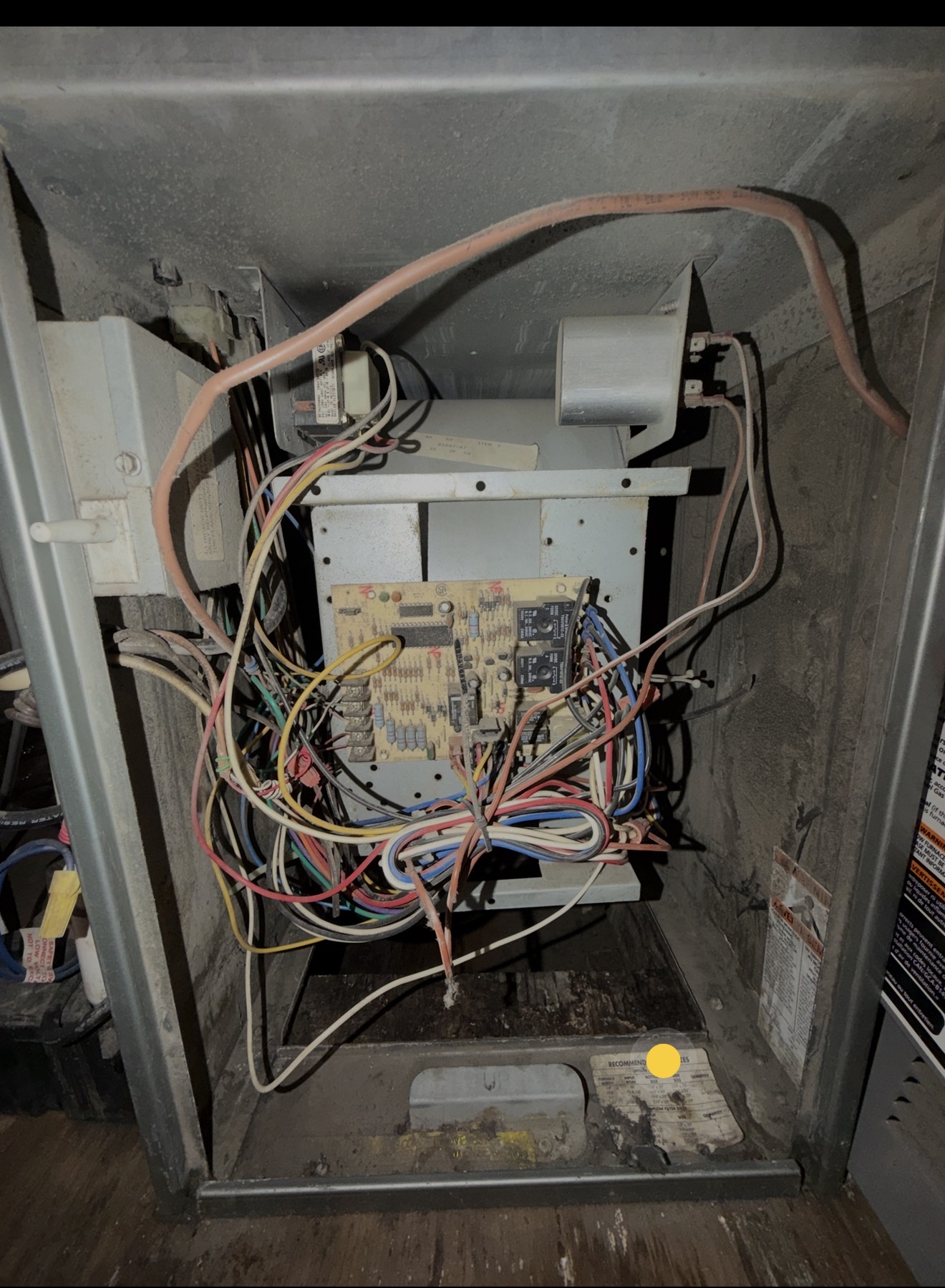
Inside an older furnace during inspection. Seasonal maintenance gives us a chance to check controls, wiring, airflow, and safety components before heating season.
What a Professional Furnace Tune-Up Covers
Some of the most important checks aren't a homeowner job, and that's fine. On a VORXS furnace tune-up, we check the parts you shouldn't have to: the burners and ignition, the heat exchanger, the safety controls, and carbon monoxide and gas safety, along with the thermostat, airflow, and electrical components. On a gas system, that safety side matters just as much as the heat.
If you'd rather not track the timing yourself, a seasonal heating maintenance plan covers the fall furnace tune-up and keeps a record of the work, which can help with a manufacturer warranty down the road. Same honest, no-pressure approach either way: we tell you what we find, show you what matters, and never push a repair we wouldn't make on our own home.
Ideally before the first cold stretch, while the weather is still mild. In Orange County the furnace often sits unused from spring into fall, so checking it early gives you time to fix anything, or book a tune-up, before you actually need the heat.
What can I check on my furnace myself before winter?
Plenty that is perfectly safe: replace or inspect the air filter, set the thermostat to heat and test it with fresh batteries if it uses them, make sure supply and return vents are open, and run one full heating cycle while you watch and listen. Leave the burners, gas, and heat exchanger to a technician.
How often should a furnace be professionally serviced?
About once a year, ideally in the fall before heating season. A yearly tune-up helps with safety, airflow, and reliability, and it keeps a service record that can matter for a manufacturer warranty later on.
What does a furnace tune-up include?
A VORXS furnace tune-up checks the burners and ignition, the heat exchanger, the safety controls, and carbon monoxide and gas safety, along with the thermostat, airflow, and electrical components. The goal is to catch a small issue in the fall instead of a no-heat night in the winter.
Is fall furnace maintenance worth it if my furnace seems fine?
Usually, yes. A furnace can run while a safety issue quietly develops, and a gas system especially deserves a look at the heat exchanger and combustion side. A tune-up is inexpensive next to an unexpected no-heat repair or a safety scare.